New regulatory requirements in the field of sustainable development as part of the development of the legislative framework: experts convened at the Civic Chamber of Russia to deliberate on key areas for urban development enhancement
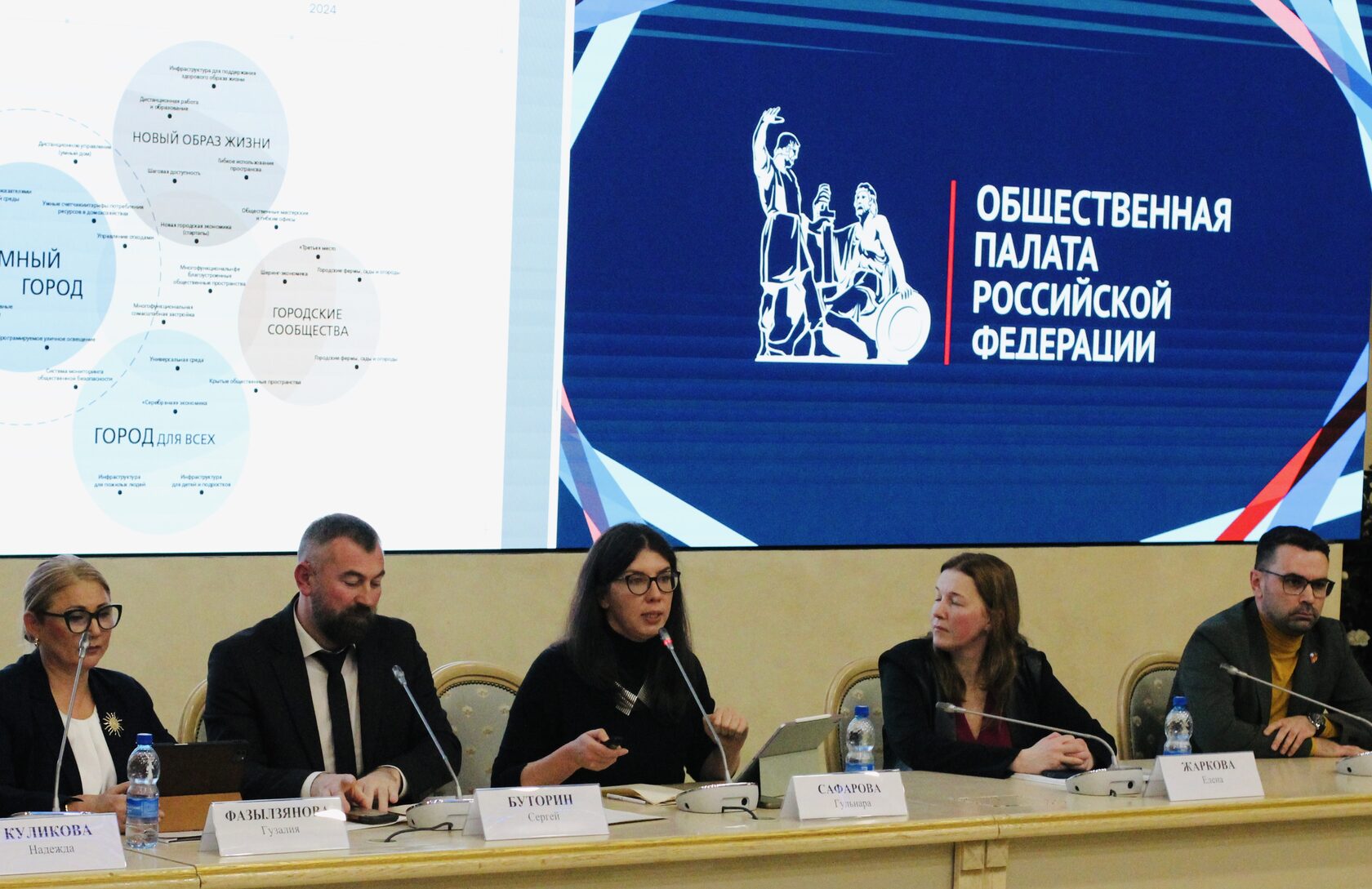
One of the key events in the field of urbanism and territorial development was the conference "Cities and Towns in the Modern Era: New Approaches, Solutions, Successful Cases", held on January 30 at the site of the Civic Chamber of the Russian Federation.
The forum was organised by the Commission on Housing and Communal Services, Construction and Roads of the Civic Chamber of Russia with the partner support of the Foundation for International Business Communication (FIBC), the All-Russian Association for the Development of Local Self-Government (VARMSU), and the Association of Participants in the Low-Rise and Individual Housing Construction Market. The focus of the forum was on the development of strategies and practical mechanisms for the transition of urban and rural spaces to a qualitatively new level. The event is presented as an effective discussion platform bringing together representatives of government, business circles, the expert community, and civil society activists.
The active discussion was attended by specialists from various fields, including developers, builders, architects and urbanists, environmentalists, financiers, lawyers, managers, and social activists. As the participants noted, such a synthesis of knowledge and experience allowed not only to clearly identify the main challenges in creating a comfortable environment, but also to work out specific proposals based on successful practices and modern technological capabilities.
The conference programme included five thematic sessions, each of which was devoted to in-depth study of the most pressing issues: "Financial control and efficiency improvement in construction", "Innovative materials and technologies as the basis for future structures", "New approach to the creation and improvement of public spaces", "Integrated development strategies aimed at revitalising small towns", "Market demands: green standards, expertise, and forms of collaboration".
Within each block, the moderators-practitioners and leading experts analysed real-world cases and existing barriers, and proposed specific mechanisms to overcome them.
Sergey Butorin, Deputy Chairman of the relevant commission of the Civic Chamber of the Russian Federation, outlined the main goal of the event as the search for new formats for the implementation of modern projects related to life outside the city.: "Today, people are not buying square meters, but an environment for living, and it is very important that they feel comfortable in it. Infrastructure, such as accessibility of kindergartens, schools, and parks, is vital to people. If we create villages suitable for rural life with the relevant infrastructure, then it will be even more in demand. Especially if it is a closed-loop infrastructure: a place where the family can live, work, relax, spend their free time, play sports; with a good standard for a comfortable stay."
According to Butorin, the conference laid the foundation for an ongoing working dialogue aimed at the practical implementation of projects that can make Russian cities and towns more comfortable, environmentally friendly, and human-oriented: "We tried to identify the best practices for creating high-quality infrastructure for living. This topic is in demand, and we would like it to develop, and our conference was just the beginning of a series of events where we could share the best projects and practices."
During the sessions, special attention was paid to the problems of small towns and new settlements, where the need for integrated, technological and economical solutions is in special demand.
Moderating the session "New philosophy of public spaces and landscaping," Sergey Butorin noted that developers already have solutions in their arsenal that allow them to create small towns and settlements with a focus on modern infrastructure. "The level of demand may vary in each region, but there is a general trend towards high-quality suburban living. And if we create such projects and find comprehensive solutions within the framework of the "Infrastructure for Living" national project, then the demand for them will grow, and we will be able to disperse the population of cities. Villages and towns do not develop or grow without high-quality infrastructure; there is a large outflow of residents from there," the speaker stated.
Cadastral engineer and forensic expert Ekaterina Montonen called for greater freedom for the regions, drawing attention to the fact that the development of territories is often regulated by urban development and zoning plans, approved about ten years ago. "Yes, they are required, in relation to cities with millions of inhabitants, but still, most of our settlements are villages and towns. Therefore, maybe we should not pursue the path of centralisation, but rather focus on one main settlement, one main enterprise of a particular territory," she suggested.
Yulia Savelieva, head of the Saveliev Legal Bureau, spoke about the legal vacuum in the sphere of control over urban planning activities: "What we get is jobs without a contract, without a project, without government control, hence the numerous stories in the news about developers, condemned buildings, etc. By removing restrictive measures, the government assumed that the market is capable of self-regulation, but practice shows that the market is not always ready for this."
A significant part of the discussion was devoted to the development of small towns and the search for innovative solutions in the field of landscaping, recruitment, and expansion of international activities within this area. Today, the activities of the All-Russian Association for the Development of Local Self-Government (VARMSU) make a great contribution to the development of local self-government.
In her speech on "Small towns as growth points and drivers of municipal development," Galina Danilchenko, Co-Chair of the VARMSU, emphasized that it is in small towns that traditional values, historical heritage, mentality and culture are preserved. "Hometowns of each of us are the strength of Russia. Small towns are not just points on the map, but drivers of development that transmit momentum from municipalities through the regions to the federal level, ensuring the unity and integrity of the country," said Galina Danilchenko. She also spoke about the projects implemented by the Association in Russia and abroad.
Since July 2024, the VARMSU has been legally granted the status of the sole organisation representing the interests of the Russian municipal community at all levels of government, including in international relations. "There are always some touchpoints. Therefore, international inter–municipal cooperation is a big step forward, a big step in the development of our state. At the same time, even small towns are actively involved in this process and make an important contribution to the overall development," concluded the co-chair of the VARMSU.
During their presentations at the conference, representatives of the Foundation for International Business Communications focused on the practical model of international cooperation for the development of territories and urban infrastructure. FIBC, within the framework of the International Municipal Forum, presented the "Dialogue Platform" initiative, designed to become an effective tool for expanding communication between regions, business, the scientific and educational community, and investors. The purpose of the platform is to effectively support projects for sustainable urban development, exchange best practices, and attract investment in municipal initiatives.
One of the practical outcomes of the forum was the signing of a cooperation agreement between the Association of Participants in the Low-Rise and Individual Housing Construction Market and the Russian Creative Union of Cultural Workers, aimed at integrating the cultural component into territorial development projects.
One of the key events in the field of urbanism and territorial development was the conference "Cities and Towns in the Modern Era: New Approaches, Solutions, Successful Cases", held on January 30 at the site of the Civic Chamber of the Russian Federation.
The forum was organised by the Commission on Housing and Communal Services, Construction and Roads of the Civic Chamber of Russia with the partner support of the Foundation for International Business Communication (FIBC), the All-Russian Association for the Development of Local Self-Government (VARMSU), and the Association of Participants in the Low-Rise and Individual Housing Construction Market. The focus of the forum was on the development of strategies and practical mechanisms for the transition of urban and rural spaces to a qualitatively new level. The event is presented as an effective discussion platform bringing together representatives of government, business circles, the expert community, and civil society activists.
The active discussion was attended by specialists from various fields, including developers, builders, architects and urbanists, environmentalists, financiers, lawyers, managers, and social activists. As the participants noted, such a synthesis of knowledge and experience allowed not only to clearly identify the main challenges in creating a comfortable environment, but also to work out specific proposals based on successful practices and modern technological capabilities.
The conference programme included five thematic sessions, each of which was devoted to in-depth study of the most pressing issues: "Financial control and efficiency improvement in construction", "Innovative materials and technologies as the basis for future structures", "New approach to the creation and improvement of public spaces", "Integrated development strategies aimed at revitalising small towns", "Market demands: green standards, expertise, and forms of collaboration".
Within each block, the moderators-practitioners and leading experts analysed real-world cases and existing barriers, and proposed specific mechanisms to overcome them.
Sergey Butorin, Deputy Chairman of the relevant commission of the Civic Chamber of the Russian Federation, outlined the main goal of the event as the search for new formats for the implementation of modern projects related to life outside the city.: "Today, people are not buying square meters, but an environment for living, and it is very important that they feel comfortable in it. Infrastructure, such as accessibility of kindergartens, schools, and parks, is vital to people. If we create villages suitable for rural life with the relevant infrastructure, then it will be even more in demand. Especially if it is a closed-loop infrastructure: a place where the family can live, work, relax, spend their free time, play sports; with a good standard for a comfortable stay."
According to Butorin, the conference laid the foundation for an ongoing working dialogue aimed at the practical implementation of projects that can make Russian cities and towns more comfortable, environmentally friendly, and human-oriented: "We tried to identify the best practices for creating high-quality infrastructure for living. This topic is in demand, and we would like it to develop, and our conference was just the beginning of a series of events where we could share the best projects and practices."
During the sessions, special attention was paid to the problems of small towns and new settlements, where the need for integrated, technological and economical solutions is in special demand.
Moderating the session "New philosophy of public spaces and landscaping," Sergey Butorin noted that developers already have solutions in their arsenal that allow them to create small towns and settlements with a focus on modern infrastructure. "The level of demand may vary in each region, but there is a general trend towards high-quality suburban living. And if we create such projects and find comprehensive solutions within the framework of the "Infrastructure for Living" national project, then the demand for them will grow, and we will be able to disperse the population of cities. Villages and towns do not develop or grow without high-quality infrastructure; there is a large outflow of residents from there," the speaker stated.
Cadastral engineer and forensic expert Ekaterina Montonen called for greater freedom for the regions, drawing attention to the fact that the development of territories is often regulated by urban development and zoning plans, approved about ten years ago. "Yes, they are required, in relation to cities with millions of inhabitants, but still, most of our settlements are villages and towns. Therefore, maybe we should not pursue the path of centralisation, but rather focus on one main settlement, one main enterprise of a particular territory," she suggested.
Yulia Savelieva, head of the Saveliev Legal Bureau, spoke about the legal vacuum in the sphere of control over urban planning activities: "What we get is jobs without a contract, without a project, without government control, hence the numerous stories in the news about developers, condemned buildings, etc. By removing restrictive measures, the government assumed that the market is capable of self-regulation, but practice shows that the market is not always ready for this."
A significant part of the discussion was devoted to the development of small towns and the search for innovative solutions in the field of landscaping, recruitment, and expansion of international activities within this area. Today, the activities of the All-Russian Association for the Development of Local Self-Government (VARMSU) make a great contribution to the development of local self-government.
In her speech on "Small towns as growth points and drivers of municipal development," Galina Danilchenko, Co-Chair of the VARMSU, emphasized that it is in small towns that traditional values, historical heritage, mentality and culture are preserved. "Hometowns of each of us are the strength of Russia. Small towns are not just points on the map, but drivers of development that transmit momentum from municipalities through the regions to the federal level, ensuring the unity and integrity of the country," said Galina Danilchenko. She also spoke about the projects implemented by the Association in Russia and abroad.
Since July 2024, the VARMSU has been legally granted the status of the sole organisation representing the interests of the Russian municipal community at all levels of government, including in international relations. "There are always some touchpoints. Therefore, international inter–municipal cooperation is a big step forward, a big step in the development of our state. At the same time, even small towns are actively involved in this process and make an important contribution to the overall development," concluded the co-chair of the VARMSU.
During their presentations at the conference, representatives of the Foundation for International Business Communications focused on the practical model of international cooperation for the development of territories and urban infrastructure. FIBC, within the framework of the International Municipal Forum, presented the "Dialogue Platform" initiative, designed to become an effective tool for expanding communication between regions, business, the scientific and educational community, and investors. The purpose of the platform is to effectively support projects for sustainable urban development, exchange best practices, and attract investment in municipal initiatives.
One of the practical outcomes of the forum was the signing of a cooperation agreement between the Association of Participants in the Low-Rise and Individual Housing Construction Market and the Russian Creative Union of Cultural Workers, aimed at integrating the cultural component into territorial development projects.